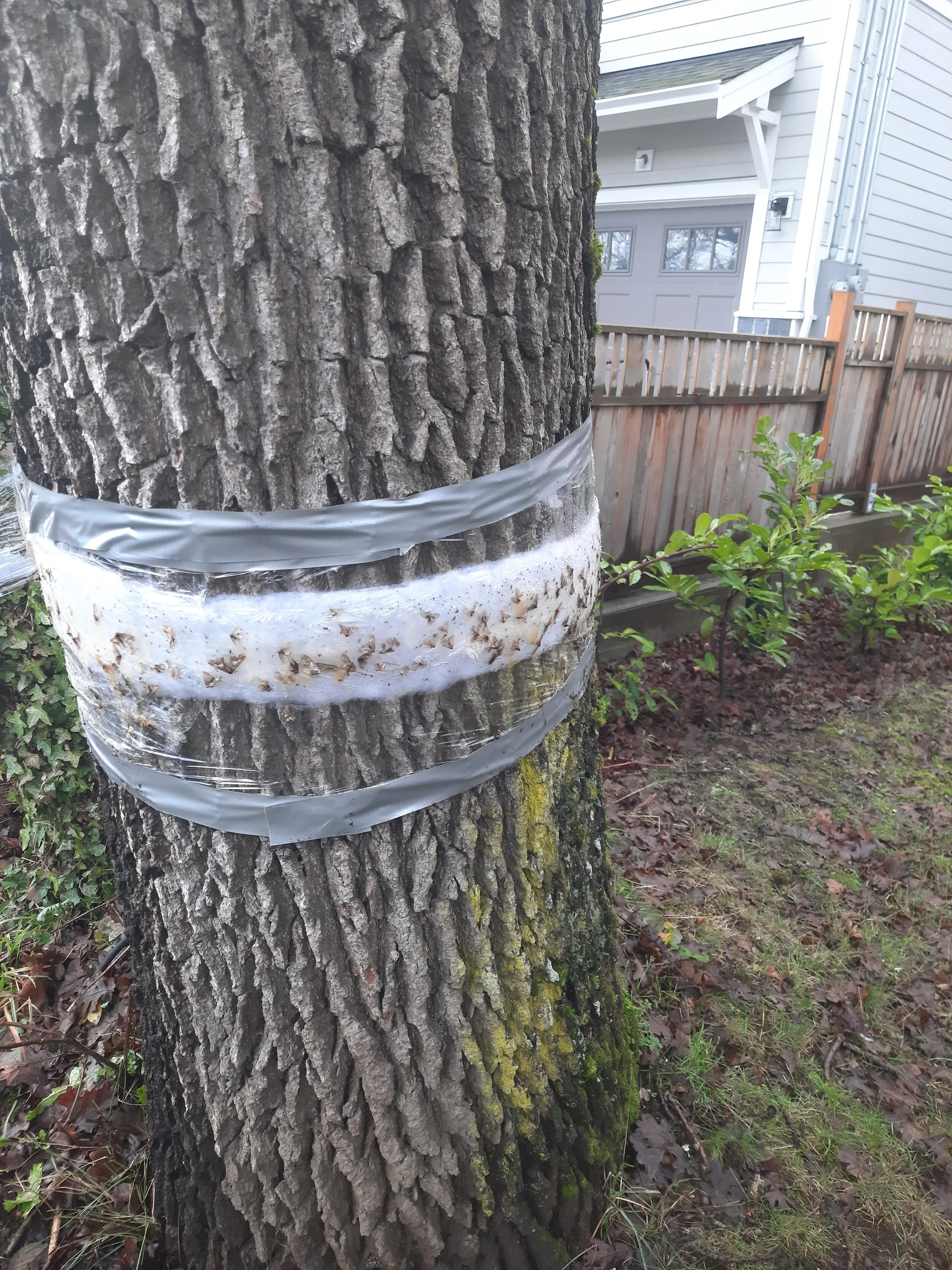
Discoloured leaves, thinning foliage and damaged growth are reasons to look more closely. Dogwood’s plant health care starts with understanding the tree, its surroundings and the symptoms you have noticed.
A tree-health assessment considers symptoms, their timing and the growing environment before recommending care. Leaf damage alone does not establish a pest, disease or treatment.
Look at the whole growing environment
Tree problems do not always start in the canopy. Watering, soil, nearby work, roots and exposure can all matter. Tell us when the change began, whether the same problem affects nearby plants and what has changed around the tree.
Identify before treating
Leaf holes, early colour change and weak growth can have several causes. A visual assessment helps guide the next step, which may involve monitoring, care adjustments or a more detailed investigation. Treatments should be chosen for an identified problem.
Build an ongoing care plan
Preventative attention can include suitable pruning, watering and root-zone care. We explain what can be assessed on site and discuss whether additional expertise or testing is needed. A single visit cannot guarantee recovery from every condition.
Tree disease, drought stress and root disturbance can look similar
Photographs of affected leaves are useful, but the wider context often matters more. Record when the symptom appeared, whether the entire crown or one branch changed, and any new paving, trenching or altered watering nearby. The next step may be monitoring, changes to care or further investigation. Treatment should follow an identified problem and an appropriate provider.
Protect the root area during garden changes
A tree can be affected by changes below it even when its branches are untouched. Before installing a driveway, new bed or drainage, include retained trees in the planning conversation. Explain the proposed digging and equipment routes, and check any protection requirements. A maintenance assessment and a formal construction tree-protection plan are different deliverables, so establish which your project needs.
Turn a tree-health concern into useful observations
Browning foliage, sparse leaves and unusual bark can have more than one cause. A photograph can start the conversation but may not identify what is happening in the roots, crown or growing environment. Record when the change appeared and whether it affects the whole tree or one section.
Your concern
An approach to discuss
What matters
Recent colour or leaf change
Review the pattern, timing and growing conditions.
Seasonal appearance, water stress and other causes need consideration before treatment is chosen.
A localized branch concern
Assess the affected area and surrounding structure.
Distinguish health investigation from a separate branch-safety or pruning enquiry.
Suspected pest or disease
Identification and suitable management discussion.
Testing, treatment permissions and the responsible provider may need a separately agreed scope.
Care should follow the cause, with a way to review it
Explain recent changes such as excavation, added soil, irrigation adjustments or construction access. A tree’s visible symptoms can follow a change in its growing space. Starting with that history is more useful than selecting a spray or fertilizer solely because foliage looks different.
If a management plan is agreed, ask what will be monitored and when a review is appropriate. Keep photographs dated and taken from repeatable positions. A treatment recommendation is not a guarantee of recovery; the tree’s condition and the underlying cause determine the realistic options.
Prepare a useful enquiry
Dates, pattern and photographs of the observed change.
Plan tree health & pest management for your community
Property conditions and current requirements differ across the region. Explore local planning for Victoria, Saanich, Langford, Colwood and other service areas, then provide the exact address for assessment arrangements.
Our tree-service pricing page explains the cost factors and inclusions to discuss. Before removal, major pruning or property changes around retained trees, check the local tree-permit guide and relevant authority.
Clear advice, from the start
Tree Health & Pest Management in Victoria: detailed answers.
Understand your options before you book.
Why is my tree turning colour early?+
Early colour can be associated with different stresses or conditions. Share the species if known, when the change started and photographs of the whole tree and affected leaves. An assessment is needed before assuming the cause.
Do you automatically spray trees for pests?+
No. The issue should be identified before choosing a treatment. Any proposed pest-management work needs a suitable method and the required qualifications for that treatment.
What should I record when leaves develop spots or holes?+
Note the date, whether one or several plants are affected and whether the damage is increasing. Send photos of the whole tree, affected branches and clear close-ups of leaves. Include watering or site changes. These details help an assessment; they do not replace diagnosis or establish that a pesticide is needed.
Can a tree with a thinning canopy recover?+
Recovery depends on the cause, extent of damage and growing conditions. Some care problems can be addressed, while decline associated with significant root or structural damage may need a different plan. Ask what can be established during a visual visit and whether testing, monitoring or specialist assessment is appropriate.
Is fertilizer the first response to poor tree growth?+
It should not be assumed to solve an unidentified problem. Water, soil conditions, roots, pests and previous site changes all deserve consideration. The appropriate care follows the assessment. Tell us about products already used, since repeated treatment without understanding the cause can make the history harder to interpret.
How does work around a tree affect a health assessment?+
Recent excavation, new paving, grade changes or heavy vehicle access can provide important context. Record where and when that work occurred and share any plans or photographs. An assessment considers the canopy alongside its growing area. Formal investigations of root damage or construction impacts require their own confirmed scope.
Can plant-health care be planned alongside pruning?+
Yes, but the pruning objective should follow what is known about the tree’s condition. A declining tree may not suit the same amount of live-branch removal as a vigorous one. Explain both the health concern and the clearance or appearance you want, so the tasks are considered together.
How do I know whether a pest treatment is appropriate?+
Ask what problem has been identified, what evidence supports it, the proposed method and who is qualified to apply it. Discuss expected outcomes and monitoring, as well as any limitations. Dogwood’s plant-health enquiry does not mean every treatment is available or suitable; the responsible provider and scope are confirmed first.